A presentation is a culmination of different disciplines forming a story, like actors on a stage. There's the client ask, the strategies, which are then brought to life visually by designers. All these are put together, presented in a way that tells a story.
I would, however, like to go over some technical points that add a different dimension to presentations. To explain these concepts, I will assume the reader is familiar with basic object and text formatting, transitions, and animations. My intentions are to use the example of creating an interactive brand guideline with website functions to illustrate how these technical concepts can work together in one document.
I would, however, like to go over some technical points that add a different dimension to presentations. To explain these concepts, I will assume the reader is familiar with basic object and text formatting, transitions, and animations. My intentions are to use the example of creating an interactive brand guideline with website functions to illustrate how these technical concepts can work together in one document.
Brand guidelines
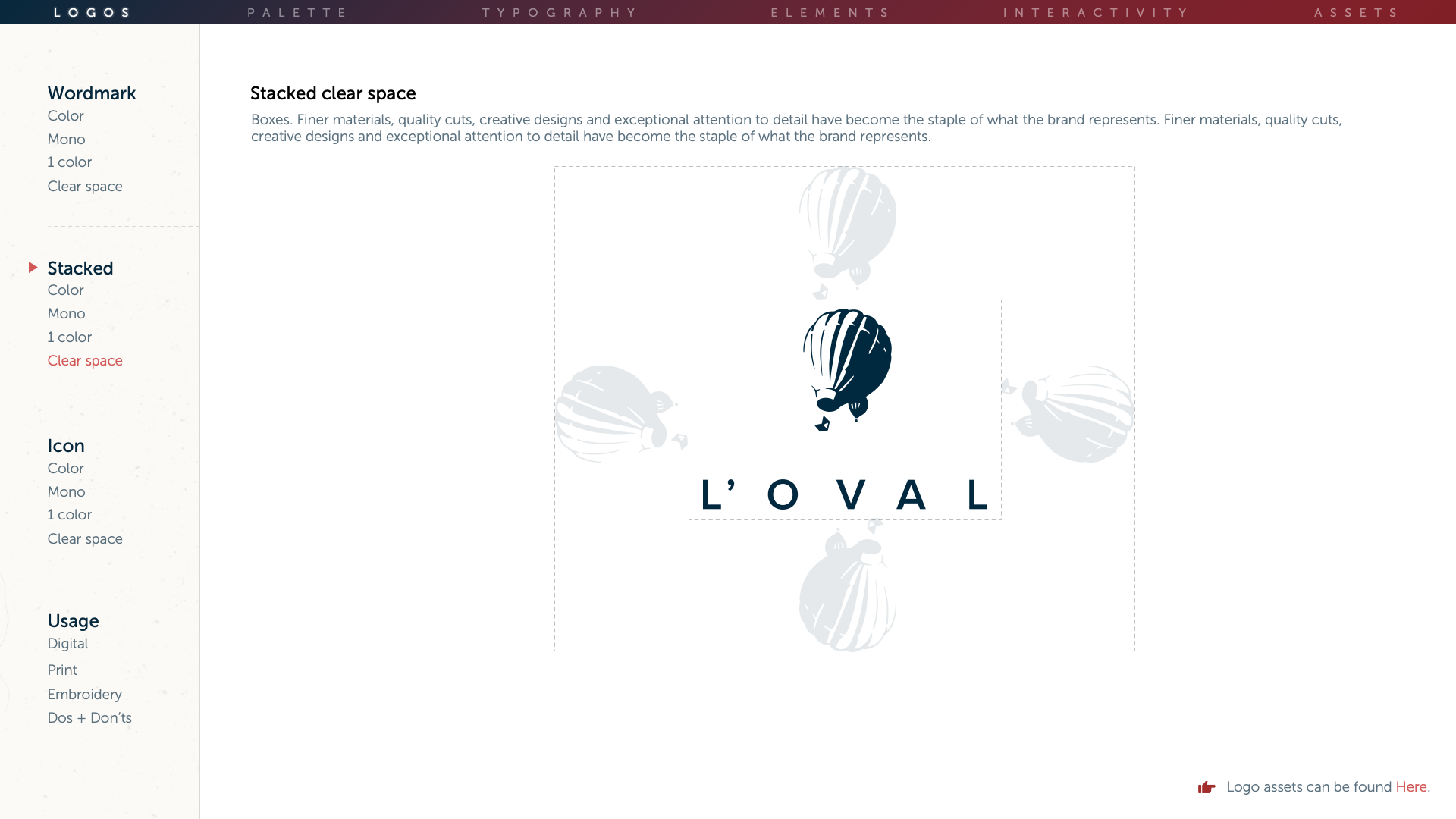
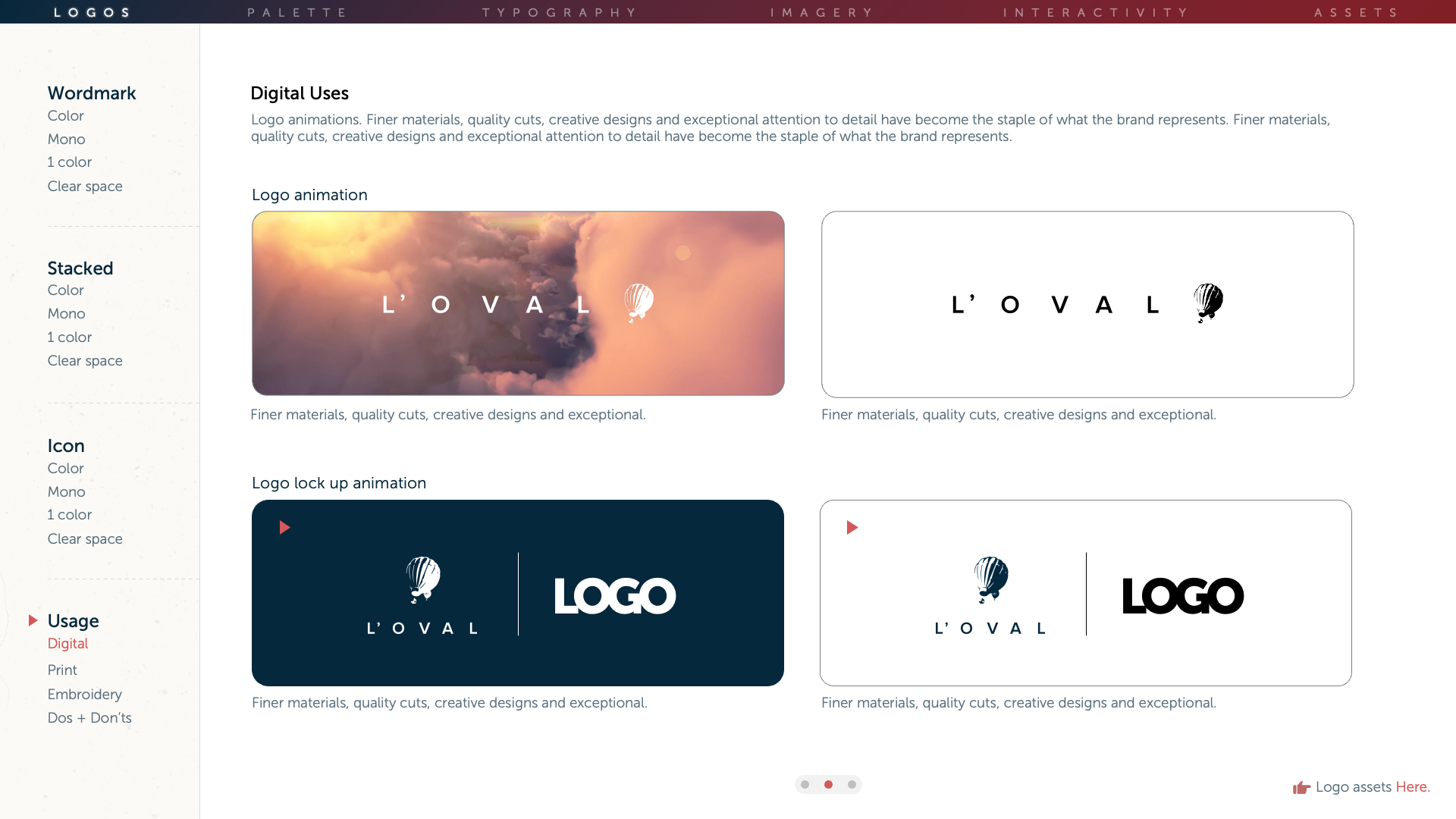
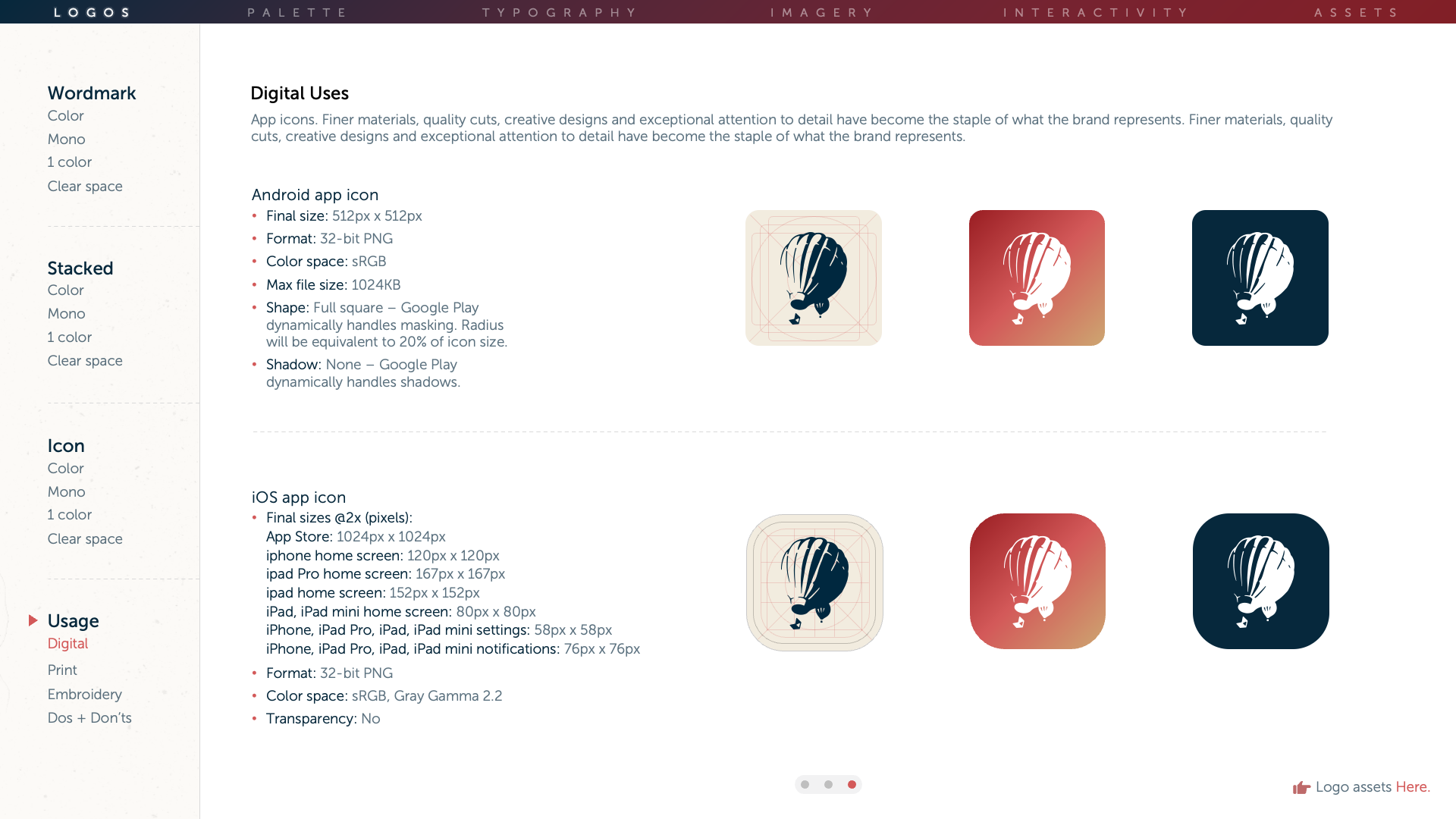
For the sake of cohesion, I'll use the example of creating an interactive brand guideline that functions like a website to illustrate how these technical concepts can work together in one document.


Macros and add-ons
Macros can greatly help improve the engagement of the audience with your presentation. Several functions can be added to the file depending on which macro you choose from a preexisting list (or create your own). In this instance, we'll enable macros to create show/hide functions based on object rollovers, as well as using a Microsoft add-on for Macs that allows interaction with live web pages.
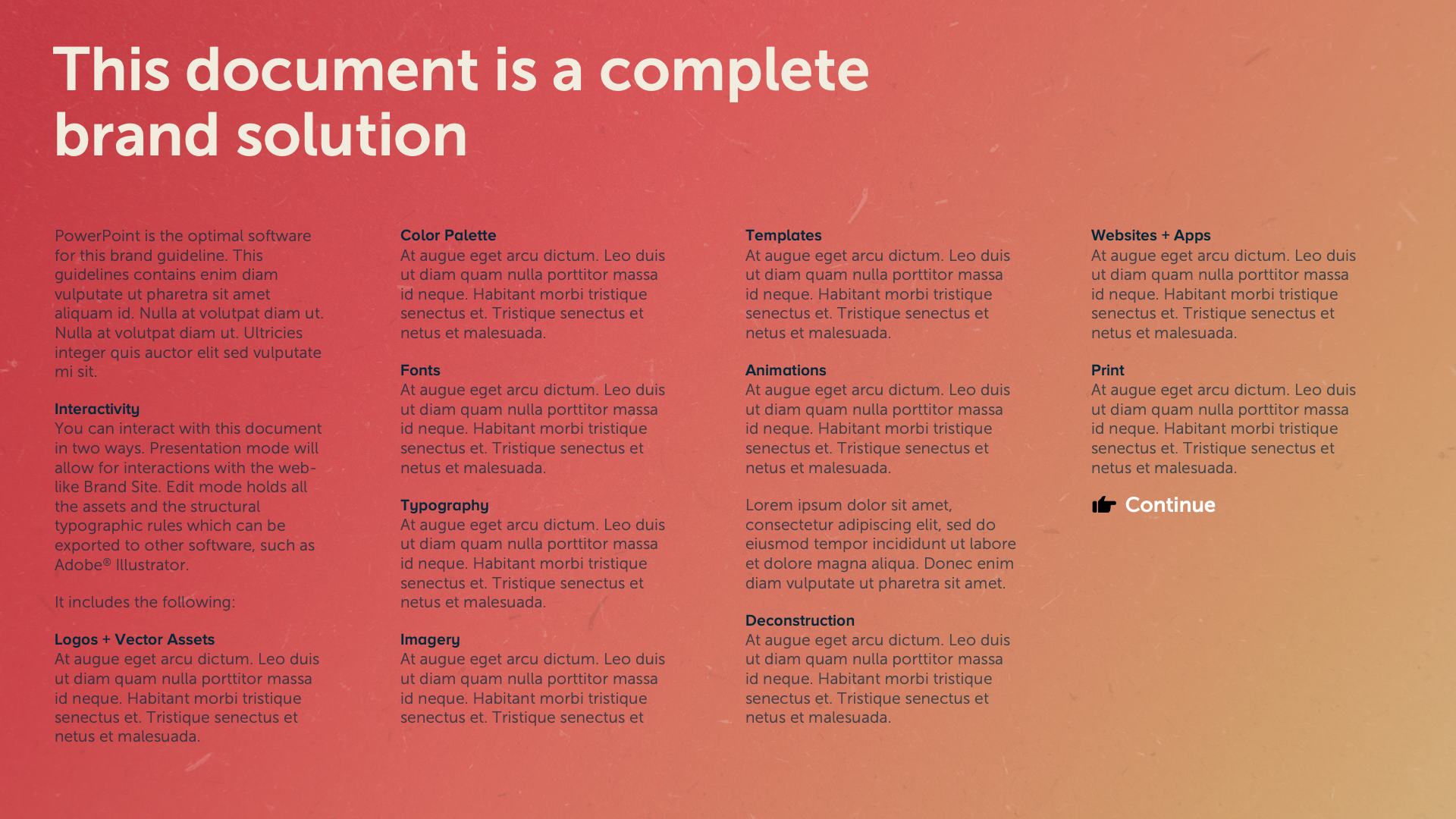
In this example, we'll use macros (or the lack thereof) as gatekeepers to the rest of the site. We can see here that having a macro enabled will allow for the appearance of a button leading into the rest of the presentation. If the Macro isn't enabled, the button will not appear, leading to a dead end.


Asset bank
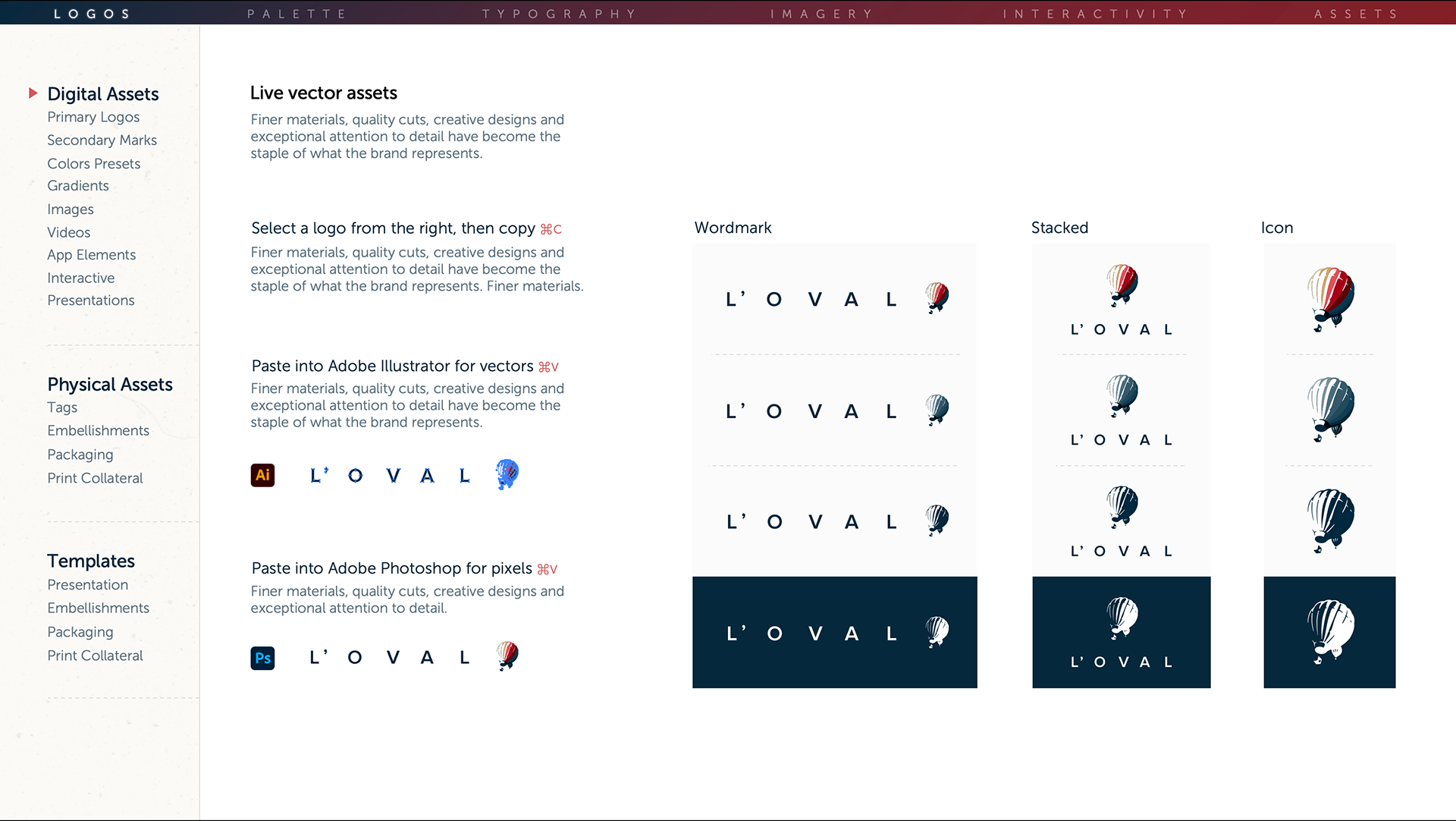
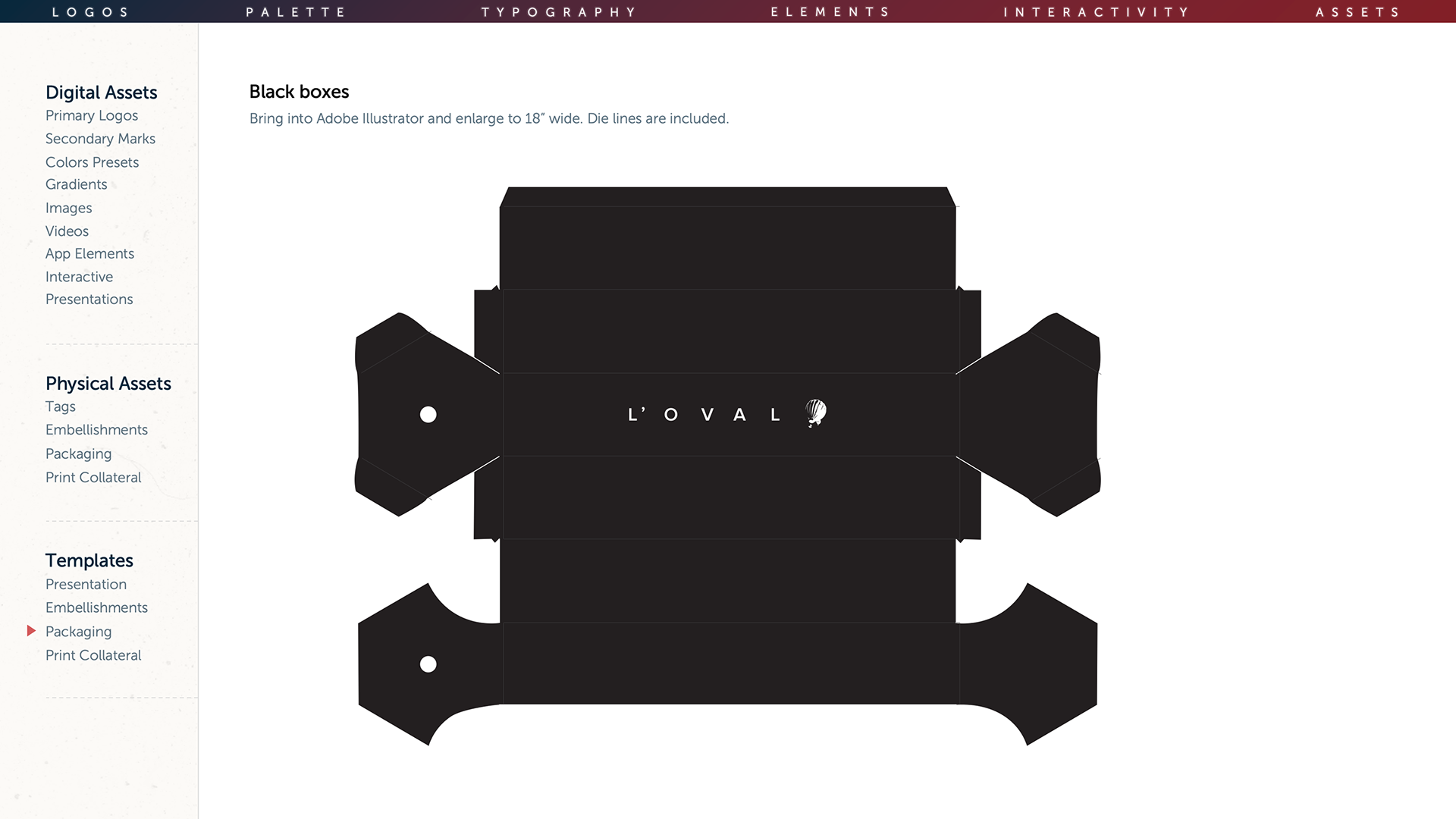
PowerPoint can serve as a bank for logos and other vector assets. The assets can be pasted or imported into the document, and they will retain their vector properties. They can be copied from the presentation document and pasted into a vector editing program. The vector imports as an RGB. At this point, the vector has a clipping mask that has been applied to it by PowerPoint. This mask can be deleted, and the vector will once again be editable.